UPDATE: All power restored as of 4:03 PM. Crews are still determining the cause.-----------------------------------------------------Crews are responding to an outage affecting 1,077 members in Greenville Co. ...
Our Safe Systematic Approach to Restoring Your Power
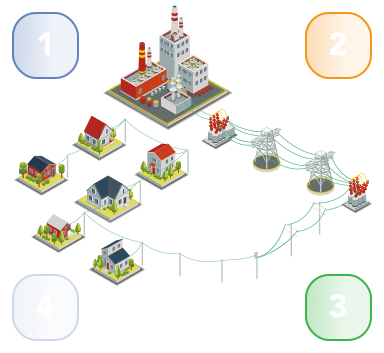
Laurens Electric uses a sophisticated mapping system to locate weak spots in its system hits. By monitoring the weather forecast, we can identify areas most likely to be affected by severe weather conditions. This data allows us to calculate the demand on our lines, and when necessary, reserve additional crews from other regional cooperatives in preparation to repair widespread damage.
Laurens Electric uses a sophisticated mapping system to locate weak spots in its system hits. By monitoring the weather forecast, we can identify areas most likely to be affected by severe weather conditions. This data allows us to calculate the demand on our lines, and when necessary, reserve additional crews from other regional cooperatives in preparation to repair widespread damage.
Step 2
Distribution Lines
Storm damage can often affect distribution lines, which deliver electricity from the substations to groups of commercial or residential customers. Once power is restored to these main power lines, all customers served by the supply line should have power. If your neighbor has power and you do not, a different main power line may serve you or you may have damage to your tap line or individual circuit.
Step 3
Tap Lines
Tap lines, or single-phase lines, are widespread and carry electricity from distribution lines to individual homes. One tap line may serve as many as 30 homes or fewer in more rural areas. These lines carry power to utility poles or underground transformers. A homeowner who is still without power after this step may have a problem on their property.
Step 4
Individual Homes
Individual repairs begin once all other lines are repaired. This is the most laborious step in the process to restore power. Lauren’s Electric can repair equipment, poles and the service line to your home. The co-op cannot, however, repair the electrical attachment on the side of a building. This is the responsibility of the property owner. A licensed electrician can assist you with your repair.